
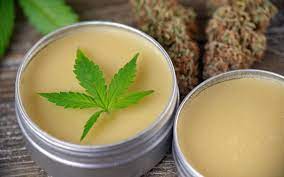
Cannabis may be used both orally and topically to treat a problem from the inside out. This is especially useful when systemic drugs fail to alleviate a specific area of concern. Many arthritic patients, for example, consume cannabis orally or inhaled for pain and inflammation alleviation. If the arthritis is mostly affecting the knees, a topical can be used to treat local discomfort when systemic medicine may be ineffective.
Topicals can be created from cannabis products that are Type I which isTHC-dominant, Type II, a blend of CBD: THC, or Type III which is CBD-dominant. There are a lot of CBD-dominant or CBD: THC cannabis topicals on the market right now. Each instance and individual is distinct. To identify what works best for them, a patient may need to test a variety of cannabis products.
This is due to the fact that topicals come in a wide variety of chemovars, potencies, and components. Using topical has advantages to our body. No systemic effects, therefore no impairment. It is effective in local therapy with no dose restrictions and few adverse effects. This may boost the effects of systemic medications in the target region. It can also be administered many times per day.
Picking The Right Type Of Topical To Use
Cannabis topicals are available in a number of forms. Cannabis is usually extracted into an alcohol or oil basis before being turned into a topical product. Alcohol extractions, often known as liniments, have long been used as a “traditional cure” for a variety of diseases, including painful joints. Many cannabis topicals on the market start with a cannabis-infused oil.
Consider the type of skin lesion vs. the preparation when deciding which topical to utilize for your skin problem. If your skin is damp or “draining,” for example, avoid using an oily or greasy ointment. A lotion or a gel might be good if the issue is in a hairy region. Gels have a tendency to dry up the skin, so they’re not the best choice for the skin.
Salves and ointments are generally semisolid, waterless substances. They’re oily and thick. Oil, paraffin, or petrolatum is used to make salves and ointments. Their ability to penetrate the pores is advantageous for dry or inflamed skin as well as being able to be absorbed through the epidermis into deeper layers of tissue such as muscle where it can provide relief from pain without causing inflammation of surrounding tissues.
Pastes combine the properties of an ointment with a powder. The powder allows the skin to “breathe” more freely. Pastes are great for dry skin or an atypical region that is surrounded by healthy skin. Because of their texture, they are able to stay in the intended location and not spread to other places. Spray, which is a combination of liquid or solid particles in a gas, is used to make sprays. Sprays require less time to apply and are simple to apply to hard-to-reach locations. Meanwhile, Alcohol and a moisturizing component are used to make lotions, which are oil in water formulations. The majority of lotions evaporates fast and is easy to apply to wide regions of skin.